Showing posts with label UNICEF. Show all posts

06 August 2009

MALNOURISHED KID SHOULD REMAIN MALNOURISHED KIDS BY GOVERNEMENTAL DECISSION

The UN says it has withdrawn a high energy food for children in India after the government said it had been distributed without permission.

A senior official from the UN's children agency, Unicef, told the BBC that malnourished children would now be given a locally available product.

He said this would be instead of the imported ready-to-use therapeutic food.

Unicef had been distributing the food, made of peanut paste, to malnourished children in two Indian states.

It said food provided locally in Bihar and Madhya Pradesh was not sufficient for children in a critical condition.

Malnourished children

Unicef says the Ready to Use Therapeutic Food (RUTF) is a high energy relief treatment given to thousands of severely malnourished children around the world.


The government says improvements have been made to food distribution
It says children with acute malnutrition require life-saving treatment, which is sanctioned by the World Health Organisation.

India is home to the greatest number of malnourished children in the world and it is estimated that more than half of them are in the two states.

Unicef was asked by the two state governments to distribute the high-energy peanut paste to affected children in two provinces. It imported about $2m worth of the food for distribution.

"The government of India was not aware of this, it felt that it was not adequately tested. So they have asked us to take it out of India, which we have now done," Daniel Toole, Unicef's regional director for South Asia told the BBC.

The agency has now re-exported the therapeutic food to Afghanistan and Madagascar, where it has been used for a long time.

Indian officials say that imported peanut paste is expensive and that they are not convinced about its effectiveness. They want the product to be approved by the Indian health ministry first.

'Easier'

"Nothing should come behind our back. Nothing should be done in the name of emergency when we have not declared an emergency," Shreeranjan, the joint secretary of the Ministry of Women and Child Development told the Reuters news agency.

Indian officials have told Unicef to use locally available alternatives like therapeutic milk. But there are differences between the two products.

"What we have seen in parts of Sri Lanka, Pakistan and in Africa is that... peanut paste for children is a little bit slower but it is much more steady and easier. And mothers can take it home even after they start the treatment."

In addition, the food does not require refrigeration or added water.

Health campaigners have criticised the Indian government's decision saying it is an over-reaction. They say despite various nationwide measures to end malnutrition, the country is still facing the problem.

The country's booming economic growth, they say, is not trickling down to millions of poor.

11 March 2009

THE CHILD BRIDES


80 yrs since ban, 45% of girls still married off before 18
48% Of Them Get Pregnant Before Attaining Majority: Survey


From Kounteya Sinha | TNN

Laws banning child marriages were introduced in the country in 1929 but 80 years down the line, the social ill continues to be as grave as ever.
Nearly half the women in India are married off before they reach the legal age of 18, a joint Indo-American study announced in the medical journal ‘Lancet’ on Tuesday.
After looking at data of 22,807 women aged 20-24 years, around 44.5% of these women were found to have got married before the age of 18.
According to researchers specialising in social and behavioural sciences at Boston University School of Public Health (BUSPH), economic and educational reforms in India have failed to lower the prevalence of child marriages, fuelling risks of multiple unwanted pregnancies, their termination and sterilisations.
Even worse, it has been found to be associated with poor fertility outcomes, such as unwanted and terminated pregnancies and repeat childbirths in less than 24 months.
Lead author Dr Anita Raj, associate professor at BUSPH, said the study found that more than one in five — 22.6% — were married before age 16, while 2.6% were married before age 13. Women who married younger than 18 were significantly more likely to report no contraceptive use before their first childbirth. Nearly half — 48.4% — of women who were married as children reported giving birth before they turned 18.
“These results suggest that neither recent progress in economic and women’s development, nor programmatic efforts to prevent child marriage and promote maternal and child health, have been sufficient to reduce the prevalence of child marriage in India,” Dr Raj said.
The study found sterilisation rates were higher for women married as children than for those married as adults — 19.5% compared to 4.6%. Overall, more than one in eight women, or 13.4%. had been sterilised. Of those not sterilised, more than three-quarters reported no present contraception use. Child brides were also at greater risk of a fistula — a tear in the genital tract — as well as pregnancy complications and death and sickness as a result of childbirth. India introduced laws against child marriage in 1929 and set the legal age for marriage at 12 years. The legal age for marriage was increased to 18 years in 1978.
The researchers said, “Women who had been child brides were 37% likelier not to have used contraception before their first child was born; seven times likelier to have three or more births; and three times likelier to have a repeat childbirth in less than 24 months.”
They added, “They were also more than twice as likely to have multiple unwanted pregnancies, nearly 50% likelier to have an abortion and more than six times likelier to seek sterilisation compared with counterparts who had married after the age of 18.”
Unicef recently said that child marriage was increasing India’s maternal and infant deaths. Girls who give birth before the age of 15 are five times more likely to die in childbirth than women in their 20s. If a mother is under the age of 18, her infant’s risk of dying in its first year of life is 60% greater than that of an infant born to a mother older than 19. “More than 40% of the world’s child marriages take place in India. Worldwide, more than 60 million women between 20-24 were married before they were 18. Child brides become mothers much before their bodies are physically mature,” Unicef ’s Karin Hulshof said. She added child marriage prevented many girls from continuing education and are less likely to seek medical attention for babies.

CHILD BRIDES


22.6% girls married before 16, while 2.6% wedded before 13
48.4% of married girls have a child before they turn 18
37% of them did not use contraception before first baby
They are seven times likelier to have more than three children
Three times likelier to have a child again in less than 24 months
They are also nearly 50% likelier to have an abortion

16 February 2009

INDIAN MATERNAL MORTALITY FIGURES & CHILD FATALITIES

Every 7 minutes a woman dies due to childbirth complications’

From Kounteya Sinha | TNN

New Delhi: Avoidable complications during child birth are killing 78,000 women in India every year. This means on an average, one woman dies from complications related to pregnancy and childbirth every seven minutes.
But not only the mothers are dying one million children born in India are dying every year even before they become 28 days old. A child born in India is 14 times more likely to die during the first 28 days than one born in the US or UK. These are some of the shocking findings of UNICEF’s ‘State of the World’s Children 2009’ report released on Thursday.
According to the report, an Indian woman is 300 times more likely to die in childbirth or from pregnancy-related complications than women in America or England. For every mother who dies, 20 others suffer pregnancy-related illness. Around 10 million women annually experience such adverse outcomes. Despite an increase in institutional deliveries, 60% of pregnant women still deliver their babies at home.
In India, more than two thirds of all maternal deaths occur in a handful of states — UP, Uttarakhand, Bihar, Jharkhand, Orissa, MP, Chhattisgarh, Rajasthan and Assam. In UP, one in every 42 women faces risk of maternal death, compared to 1 in 500 women in Kerala.

24 July 2007

SEXUAL EDUCATION & ITS LIMITS IN INDIA


Why would sexual education lead to immorality and single parent families?

India need sex education as much as condom promotion to fight HIV/AIDS, there are 2.5 Mio HIV cases ( last estimation, earlier estimation was 5 Mio)
The Health Ministry and National AIDS Control Organisation (NACO) are keen on introducing basic sex education as part of life-skills training in schools. With most parents and teachers shying away from discussing issues of even a remotely sexual nature, many adolescents have little or no access to correct information about sex in many parts of the country.
According to UNICEF, a “question box” put up in schools in Sangli district of Maharashtra, inviting students to post queries, got over 1,00,000 questions in a year. And it makes sense since in UNESCO publications it was shown that over 50 % of adolescent were thinking that HIV looks like serious ill man and 30 % still believe HIV is transferred by moskitos.
In India there are several tendencies to keep sexual education out of school and the most simple reason is obviously, it was never a part of education. Now in times of HIV and more freedom under teenager ( India in general is still very restrictive in sexual freedom … but the time the… but the time the are a changing) you might think there is no way to bypass sexual education.

The good sprits state that, even four-year-olds should be aware of their body parts and know the difference between right touch and wrong touch. Only this way sex education will protect children from abuse. “Children must be made aware. But this education should be age-specific — subtle for smaller children and detailed for adolescent .
And they find a good reason to ban sex education in schools due to the explicit exercises that Yuva, the new handbook on sex education, prescribes.
The controversy over the explicit nature of the sex education course material for schools has put the Delhi government on the defensive. it was decided to withdraw Volume 1 of the teacher’s handbook Yuva.
Volume 1 is meant for classes VI-VIII and Volume 2 for classes IX-XII. The book was prepared by the Department of Education, Delhi and Delhi State AIDS Control Society on the basis of a module developed by the HRD Ministry and National AIDS Control Society (NACO).
Another educational aid for AEP is a 66-page ‘flip chart’ produced jointly by UNICEF and NACO. The first section of the chart has realistic illustrations of naked people of both sexes at different ages, and detailed drawings of the male and female genitalia. The second section on ‘sexually transmitted infections’ — which 15-year-old boys and girls are required to view together — has graphic illustrations of the male and female sexual organs as they appear with STI.
Six states of INDIA , which have the most people living with HIV/AIDS in the world, have banned sex education for adolescents or refused to implement the curriculum, saying the course material was too explicit and it was against Indian culture.

"We are not giving ideas to young people," Rao said.
"They are already there. Some people are in denial that young people experiment with sex. They need to get real," is the answer.

Teachers state that both volumes were used to train them during seminars in 2006. Both the curriculum and seminars did not go down well with them. “Teachers were very upset about it. It encouraged some people to ask very embarrassing questions to women teachers,
” One teacher revealed that at the seminar she attended — a gathering of both sexes — all present were asked to relate their first sexual experience.
And now we clearly can see the refusal of sexual education ….. due to to the Victorian style of the paste, Indians not even the educated teacher elite is able to speak openenly about sex and that together with the deep- saffron parties and elites will make sexual education imposible.
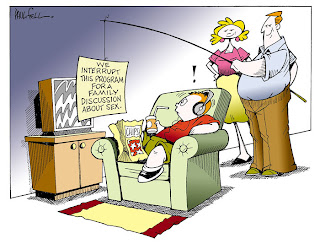
The Shiksha Bachao Andolan Samiti, (Indian Saffron Radicals) which launched an agitation on July 14 for withdrawal of the books, claims the government planned to implement the programme in 2007 but backtracked after gauging the public mood
And Lalu Yadav (Ministry of Railways by that a specialist for sexual education anyway … now I understand why in the trains is always freezing cold) does not believe in sex education. We always suspected that he didn’t think much of family planning. But now we know that Lalu-ji would prefer it if his nine children were spared sex education lessons in the classroom.
According to the head of the Secondary School Teachers Association of Uttar Pradesh, all books that teach sex education should be withdrawn. Otherwise, the teachers will make a bonfire of them.
Teachers but books on fire ! Just because they are too embarrassed to discuss sex…. books must burn !

States like Kerala, Gujarat, Maharashtra, Madhya Pradesh, Chhattisgarh and Karnataka have banned or refused to implement sex education in schools, saying the course material provided by the Centre is too explicit for Indian cultural sensibilities.

The controversy on sex education for school children has taken a severe turn in other Indian states. The Siksha Bachao Andolan Samiti, affiliated to the Rashtriya Swayamsevak Sangh, has warned teachers that they may be violating the law if they take sex to the classroom.
In a letter to teachers across the country, they have noted that teachers can be charged under Section 354 of the IPC for outraging modesty of a woman, if they follow the exercises prescribed in the UNICEF training manual on sex education in their classrooms.
Among the exercises is one in which a girl and a boy are asked to shut their eyes and touch each other’s private parts. It is apparently an attempt to help students understand biological differences between men and women. “The teacher may plead that he has sought volunteers, but in matters of sex and touching/fondling with private parts, the consent of a minor in the eyes of law is no consent,” the letter said.
But obviously all this is wrong information because in the matter of fact there non such a training manual on sexual education of UNESCO … not for use in schools or any other educational or private occasions.

But there is Renuka Chowdhury’s suggesting that not only should sex education be taught in schools, but that Indian women should learn to take the safe sex in their own hands (no misunderstandings please) by buying condoms themselves because men tend not to bother. Renuka’s position is pretty much the government’s official line: in an era of AIDS prevalence and greater sexual awareness, it makes sense to educate people about sex in a serious and sensible way...
And my hero Renuka Chowdhury, also said "sex education is not titilating. It is not supposed to excite. It is to demystify. WHAW SO THERE ARE STILL NORMAL EDUCATED THINKING PERSONS HERE.

Railway Minister Lalu Prasad on Tuesday differed with his ministerial collegue Renuka Chowdhury on sex education for children in schools, saying that it was having a "bad impact" on them and was destroying Indian culture.
Opposing sex edcuation in schools, Prasad said that "whatever information is being given about sex is having bad impact on children. It is not good. This also has bad impact on society".
Asked specifically whether he favoured such education for children, the RJD chief said, "No, not at all. This is a very bad thing. Our entire culture can collapse".
Meanwhile, BJP leader Murli Manohar Joshi has said sex education would lead to collapse of the education system and create an immoral society.

After all the BEE AND FLOWER MANUAL for teachers will come out, words like masturbation, arousal, erection , penetration, vagina , clitoris, penis and sexual intercourse have been deleted from the revised version of the training manual for teachers, diagrams which describe the journey from puberty to young adulthood have been done away with. This modified version is set to reach schools in a few weeks. If this will have any impact on HIV protection for sure not, but it will have a positive impact on birth control and that what is wanted the more Indian the better.

FEEDJIT Live Traffic Feed